Bath cooling for aluminium parts receiving decorative anodized finishes under defined processing conditions.
Metal Finishing Process Cooling
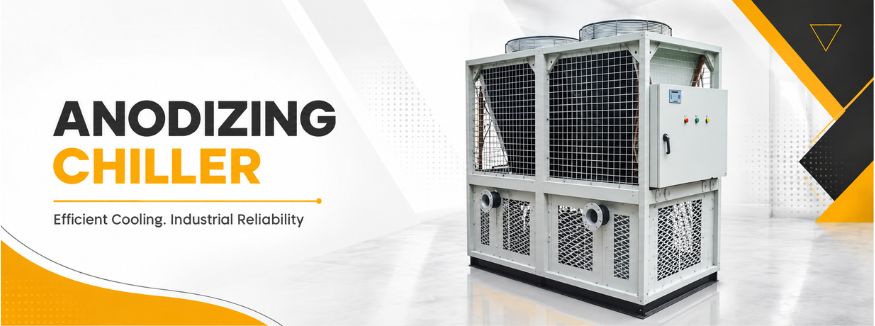
Industrial Anodizing Chiller
Control heat build-up in your anodizing bath with an Anodizing Chiller from Global Refrigeration & Equipments. The system supplies cooling fluid to a suitable heat exchanger, helping maintain the electrolyte temperature required by your aluminium surface treatment process.
We work as an Anodizing Chiller manufacturer, supplier, exporter & wholesaler for customers across Delhi NCR, Bangalore, Hyderabad, Rajasthan, Lucknow, Uttarakhand, Agra, Punjab & Himachal. Selection is based on bath chemistry, operating temperature, electrical process load and the cooling arrangement available at your plant.
✓ Electrolyte Bath Cooling
✓ Process Heat Management
✓ Heat Exchanger Integration
✓ Bath-Specific Configuration
Product Overview
Temperature Management for Aluminium Anodizing Baths
Anodizing generates heat as electrical current passes through the electrolyte. An Anodizing Chiller removes this process heat through an appropriately designed cooling circuit. Maintaining the prescribed bath temperature is one of the conditions that influence oxide layer formation and finish consistency.
Conventional anodizing and hard anodizing can require different operating temperatures and cooling capacities. The chiller, coolant and heat exchanger must be selected together, with attention to electrolyte compatibility and heat transfer performance. In an indirect arrangement, the electrolyte remains separate from the chiller's circulating fluid.
Tell us about your anodizing bath: Share the electrolyte composition, tank volume, required temperature, operating current and voltage, and production cycle to discuss the cooling requirement.
Applications
Where an Anodizing Chiller Supports Surface Treatment
An Anodizing Chiller can serve compatible aluminium treatment lines in the following applications, with cooling conditions matched to the specified anodizing process.
Cooling equipment selected for the bath temperature and heat load required by the chosen hard anodizing process.
Temperature control for anodizing lines treating suitable aluminium profiles, frames and architectural components.
Process cooling for compatible anodizing operations used in the surface finishing of specified aluminium components.
Heat removal from anodizing baths processing machined aluminium parts with defined surface treatment requirements.
Cooling support for anodizing suitable aluminium enclosures, covers and other finished product components.
Technical Details
Anodizing Chiller Design & Selection Details
The final specification depends on the anodizing recipe and installation conditions. Confirm the following parameters in the technical proposal before choosing a model.
Product Category
Anodizing Chiller
Process Duty
Cooling of compatible anodizing baths through a suitable heat exchange arrangement
Cooling Load
Assessed from electrical process input, bath conditions, production duty and other heat gains
Operating Temperature
Selected to meet the specified conventional or hard anodizing process requirement
Heat Exchanger Materials
To be verified for compatibility with electrolyte chemistry, concentration and temperature
Secondary Cooling Fluid
Water or a suitable coolant mixture, depending on operating temperature and system compatibility
Flow & Electrical Requirements
Coolant flow, pump duty and power supply as confirmed for the selected configuration
Controls & Refrigeration Components
Temperature control arrangement, compressor and refrigerant specified in the approved model datasheet
Why This Solution
Match Bath Cooling to Your Anodizing Recipe
An Anodizing Chiller should be evaluated as part of the complete bath temperature control system. Cooling capacity, electrolyte circulation, sensor position and heat exchanger condition all affect how effectively heat is removed during processing.
✓
Process Temperature Assessment
Establish the required bath temperature and acceptable variation for the treatment recipe being used.
✓
Chemical Compatibility Review
Evaluate electrolyte-contact materials separately from the chilled fluid circuit when specifying heat exchange equipment.
✓
Changing Load Consideration
Account for variations in workpiece loading, current and cycle duration when determining the cooling duty.
✓
Discuss Your Finishing Line
Send your bath and production details to Global Refrigeration & Equipments for an Anodizing Chiller proposal and quotation.